
The Making of an Octopus: My Art Process
My art process started a long time ago, back in college when I accidentally got some water on an assignment made with markers. I realized that I could treat them just like watercolors with a very different and interesting affect.
See, sometimes the original line can still be seen underneath it all. This creates a ghost-like layer to the artwork that wouldn't be there otherwise. Some of the colors are more stubborn and stay darker while others completely disappear with the water.
I usually try the colors on a scrap piece of watercolor paper first, to see what I'll be working with. Sometimes I want the line to be stronger and other times not.
Occasionally I'll have to do the base layers multiple times until I get the beginnings of a painting that I like and want to move forward with. Sometimes I'll get half way through and have to abandon it because I just don't like what's happening with the colors.
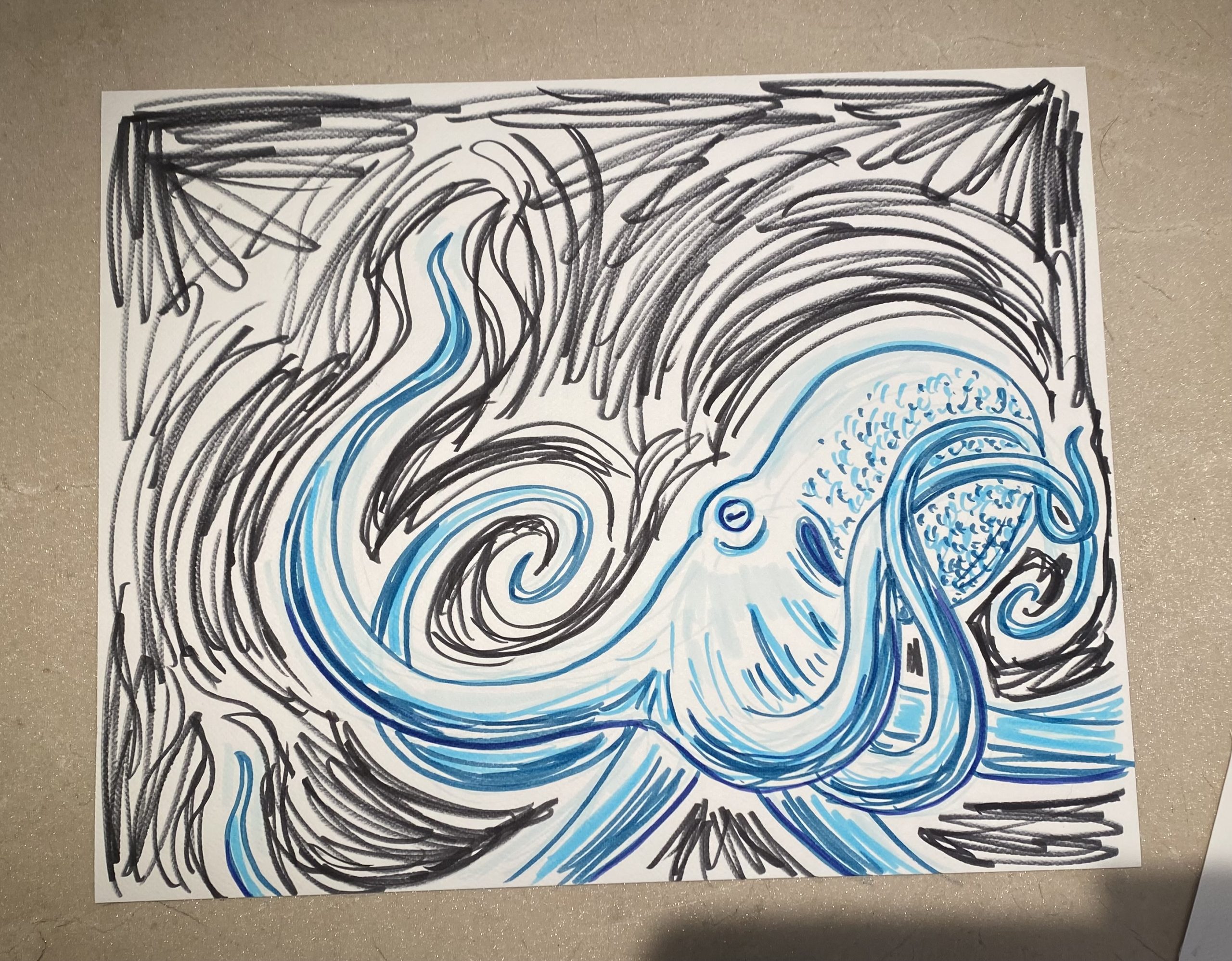
Phase 1: Markers
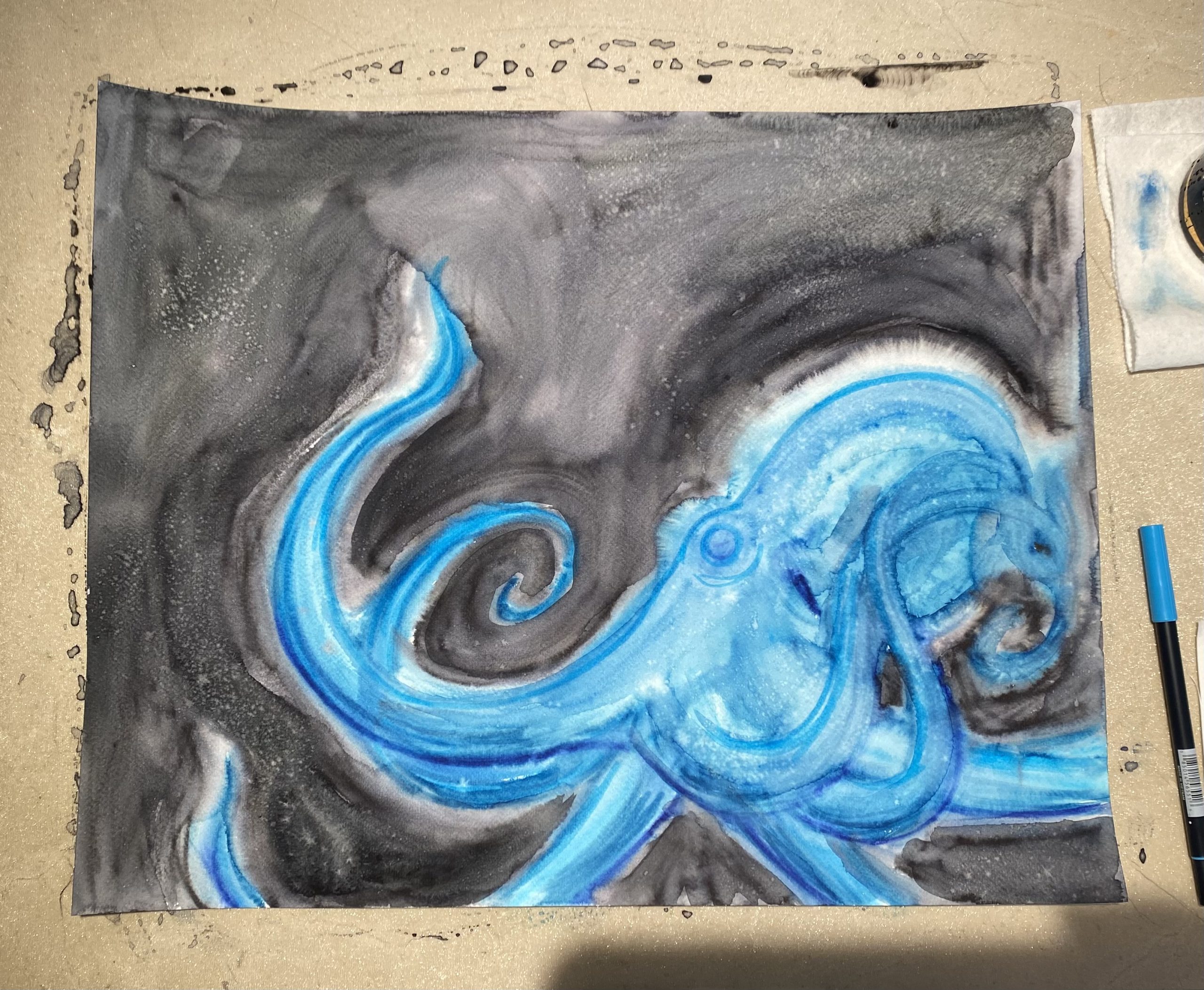
Phase 2: Water
This way of putting the color on the paper is almost the opposite of traditional watercolor painting. In that case you're applying the pigment to the paper with your brush. What I'm doing is putting the color on the paper first and then applying water to it.
After that first round is dry I might go in again with another layer of color and marker or treat it more traditionally and start painting over it with regular watercolors.
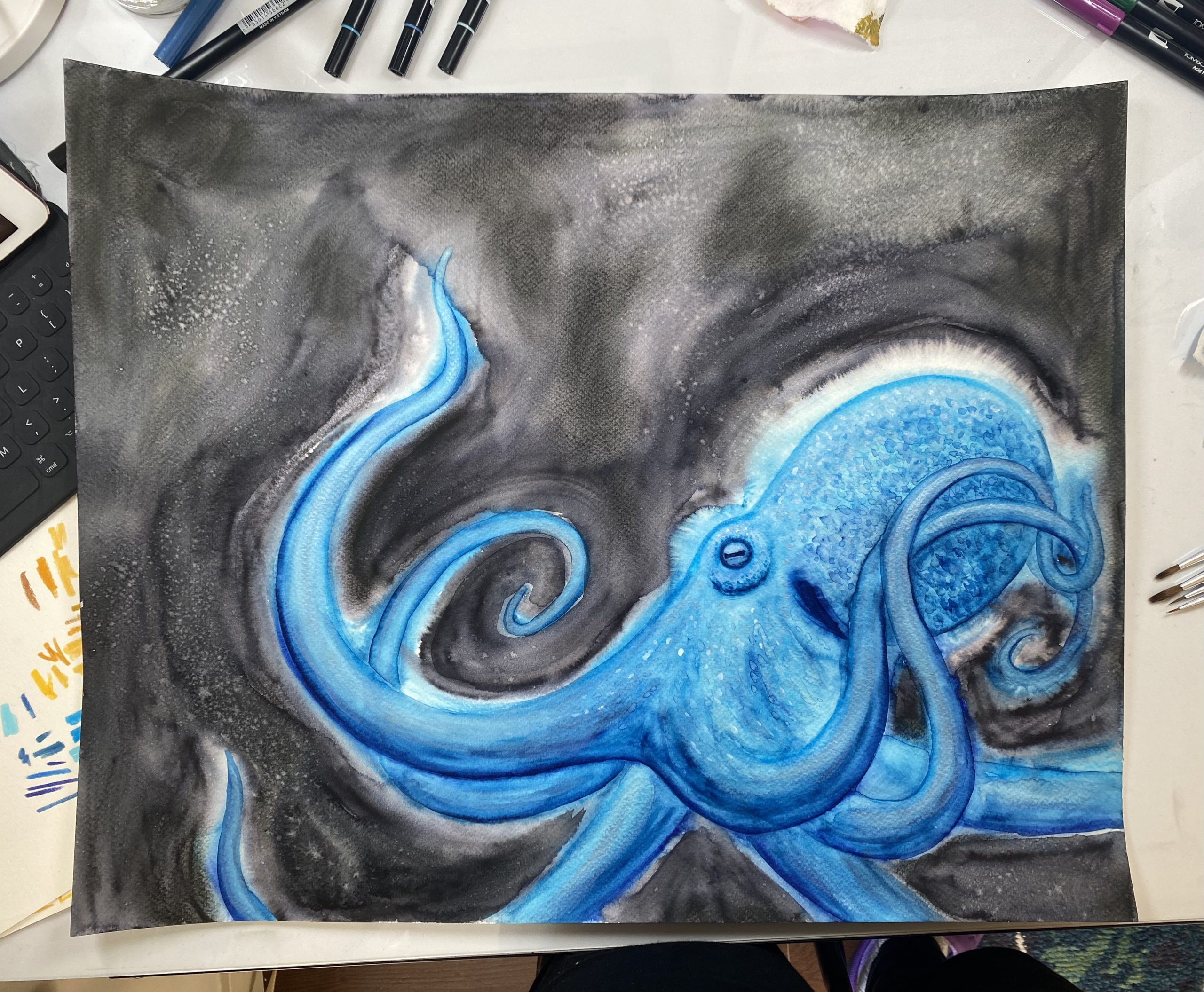
Phase 5: Details
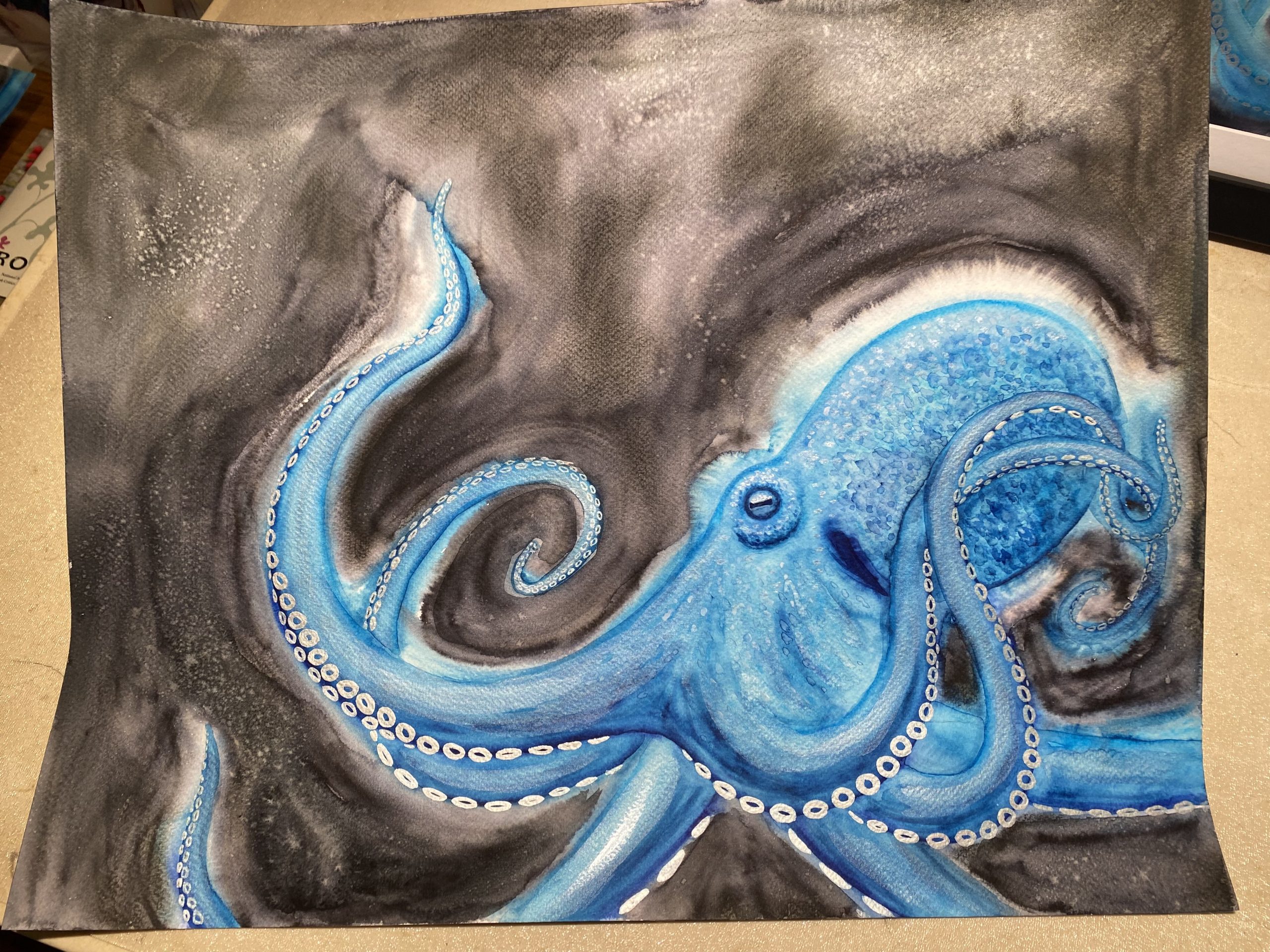
Phase 5-6: Details and Repeat - finished!
As I recently painted Kirameki three times for three commissions, I realized that I'm basically going through six phases in the artwork.
- Markers: Lay down the marker colors after a few quick color tests.
- Water: Apply the first round of water, let it dry overnight.
- Markers: At this stage, decide if I want to move forward or start another one. If moving forward, lay down the second layer of colors.
- Water: Apply water and let it dry overnight.
- Details: Add details either with marker, regular watercolors, gouache, or pastels; let it dry overnight.
- Repeat: Decide whether or not it's done or add more details, repeat step 5 until satisfied.
You'll notice I let it dry overnight several times. This step is really important to me. Studies have shown that we process information and solve problems as we sleep. Coming back to my art the next day always reveals a clear next step if I'm stuck or not sure how to make something work.
Every time I do a new painting I'm learning about my style and this technique and always wanting to try something new the next time. So I'm always excited to get the next piece started! What will it be? Do you want a particular painting?
The Phases of Three Kirameki Paintings


